
In this STM32U3 hands-on workshop, you will gain practical experience in embedded system development using STM32 microcontrollers. Through guided exercises, you’ll learn how to set up your development environment, write and debug firmware, and interface with peripherals such as GPIOs, USB, and communication modules.
You will also explore key STM32 features like low-power modes, interrupts, and real-time control. By the end of the workshop, you’ll have the knowledge you need to build and program functional projects, gaining both the confidence and skills to design and prototype your own STM32U3-based applications.
Our team of STM32 specialists will demonstrate each exercise using the STM32 NUCLEO-U385RG-Q development board with expansion boards. While these are optional, if you want to follow along with the hands-on exercises, you can acquire the hardware prior to the workshop from ST or one of our distributors (see Prerequisites).
This workshop will combine lecture with hands-on instruction. It is self-paced and can be accessed on-demand any time after the start of the selected session. However, note that live technical support (via online break-out rooms) is available only during the scheduled session hours (see table below).
This workshop is designed for engineers and developers working with 8-bit, 16-bit, or 32-bit systems—whether you’re focused on firmware or hardware design. If you’re looking to create projects using an affordable, power-efficient MCU from STMicroelectronics, this workshop is for you.
To actively participate in all 5 of the workshop projects, you will need:
Lorem ipsum dolor sit amet, consectetur adipisicing elit.
Sessions (US Eastern Time)
Each session is the complete workshop. Please select only one session when submitting your registration.

Date
Time
Morning session: Stepper motors with STSPIN820 / POWERSTEP01
9:00 - 10:00
Stepper motor fundaments
Theory: What makes a stepper turn?
Voltage and current mode drive
Limitations,speed/torque,ect
11:30 - 12:30
Lunch
11:30 - 12:30
Lunch
11:30 - 12:30
Lunch
11:30 - 12:30
Lunch
10:00 - 11:30
STSPIN820 or POWERSTEP01
Using the GUI to evaluate motor operation
Configuring motor control parameters with the GUI
Implementing a drive based on the firmware pack
10:00 - 11:30
STSPIN820 or POWERSTEP01
Using the GUI to evaluate motor operation
Configuring motor control parameters with the GUI
Implementing a drive based on the firmware pack
9:00 - 10:00
Stepper motor fundaments
Theory: What makes a stepper turn?
Voltage and current mode drive
Limitations,speed/torque,ect
Afternoon session: BLDC motors with STSPIN32F0
12:30 - 1:30
BLDC theory and fundamentals
# pole pairs
What makes FOC work (donkey and carrot example)
Sensoriess vs. Sensored feedback control
1:30 - 3:00
Implementing a 6-step drive
3:00 - 4:30
Implementing a FOC drive
3:00 - 4:30
Implementing a FOC drive
3:00 - 4:30
Implementing a FOC drive
3:00 - 4:30
Implementing a FOC drive
3:00 - 4:30
Implementing a FOC drive
3:00 - 4:30
Implementing a FOC drive
3:00 - 4:30
Implementing a FOC drive
3:00 - 4:30
Implementing a FOC drive
Afternoon session: BLDC motors with STSPIN32F0
12:30 - 1:30
BLDC theory and fundamentals
# pole pairs
What makes FOC work (donkey and carrot example)
Sensoriess vs. Sensored feedback control
3:00 - 4:30
Implementing a FOC drive
3:00 - 4:30
Implementing a FOC drive
3:00 - 4:30
Implementing a FOC drive
3:00 - 4:30
Implementing a FOC drive
3:00 - 4:30
Implementing a FOC drive
3:00 - 4:30
Implementing a FOC drive
3:00 - 4:30
Implementing a FOC drive
3:00 - 4:30
Implementing a FOC drive
3:00 - 4:30
Implementing a FOC drive
Afternoon session: BLDC motors with STSPIN32F0
12:30 - 1:30
BLDC theory and fundamentals
# pole pairs
What makes FOC work (donkey and carrot example)
Sensoriess vs. Sensored feedback control
3:00 - 4:30
Implementing a FOC drive
3:00 - 4:30
Implementing a FOC drive
3:00 - 4:30
Implementing a FOC drive
3:00 - 4:30
Implementing a FOC drive
3:00 - 4:30
Implementing a FOC drive
3:00 - 4:30
Implementing a FOC drive
3:00 - 4:30
Implementing a FOC drive
3:00 - 4:30
Implementing a FOC drive
3:00 - 4:30
Implementing a FOC drive
Afternoon session: BLDC motors with STSPIN32F0
12:30 - 1:30
BLDC theory and fundamentals
# pole pairs
What makes FOC work (donkey and carrot example)
Sensoriess vs. Sensored feedback control
3:00 - 4:30
Implementing a FOC drive
3:00 - 4:30
Implementing a FOC drive
3:00 - 4:30
Implementing a FOC drive
3:00 - 4:30
Implementing a FOC drive
3:00 - 4:30
Implementing a FOC drive
3:00 - 4:30
Implementing a FOC drive
3:00 - 4:30
Implementing a FOC drive
3:00 - 4:30
Implementing a FOC drive
3:00 - 4:30
Implementing a FOC drive
Afternoon session: BLDC motors with STSPIN32F0
12:30 - 1:30
BLDC theory and fundamentals
# pole pairs
What makes FOC work (donkey and carrot example)
Sensoriess vs. Sensored feedback control
3:00 - 4:30
Implementing a FOC drive
3:00 - 4:30
Implementing a FOC drive
3:00 - 4:30
Implementing a FOC drive
3:00 - 4:30
Implementing a FOC drive
3:00 - 4:30
Implementing a FOC drive
3:00 - 4:30
Implementing a FOC drive
3:00 - 4:30
Implementing a FOC drive
3:00 - 4:30
Implementing a FOC drive
3:00 - 4:30
Implementing a FOC drive
Afternoon session: BLDC motors with STSPIN32F0
12:30 - 1:30
BLDC theory and fundamentals
# pole pairs
What makes FOC work (donkey and carrot example)
Sensoriess vs. Sensored feedback control
3:00 - 4:30
Implementing a FOC drive
3:00 - 4:30
Implementing a FOC drive
3:00 - 4:30
Implementing a FOC drive
3:00 - 4:30
Implementing a FOC drive
3:00 - 4:30
Implementing a FOC drive
3:00 - 4:30
Implementing a FOC drive
3:00 - 4:30
Implementing a FOC drive
3:00 - 4:30
Implementing a FOC drive
3:00 - 4:30
Implementing a FOC drive
Afternoon session: BLDC motors with STSPIN32F0
12:30 - 1:30
BLDC theory and fundamentals
# pole pairs
What makes FOC work (donkey and carrot example)
Sensoriess vs. Sensored feedback control
3:00 - 4:30
Implementing a FOC drive
3:00 - 4:30
Implementing a FOC drive
3:00 - 4:30
Implementing a FOC drive
3:00 - 4:30
Implementing a FOC drive
3:00 - 4:30
Implementing a FOC drive
3:00 - 4:30
Implementing a FOC drive
3:00 - 4:30
Implementing a FOC drive
3:00 - 4:30
Implementing a FOC drive
3:00 - 4:30
Implementing a FOC drive
Afternoon session: BLDC motors with STSPIN32F0
12:30 - 1:30
BLDC theory and fundamentals
# pole pairs
What makes FOC work (donkey and carrot example)
Sensoriess vs. Sensored feedback control
3:00 - 4:30
Implementing a FOC drive
3:00 - 4:30
Implementing a FOC drive
3:00 - 4:30
Implementing a FOC drive
3:00 - 4:30
Implementing a FOC drive
3:00 - 4:30
Implementing a FOC drive
3:00 - 4:30
Implementing a FOC drive
3:00 - 4:30
Implementing a FOC drive
3:00 - 4:30
Implementing a FOC drive
3:00 - 4:30
Implementing a FOC drive
Afternoon session: BLDC motors with STSPIN32F0
12:30 - 1:30
BLDC theory and fundamentals
# pole pairs
What makes FOC work (donkey and carrot example)
Sensoriess vs. Sensored feedback control
3:00 - 4:30
Implementing a FOC drive
3:00 - 4:30
Implementing a FOC drive
3:00 - 4:30
Implementing a FOC drive
3:00 - 4:30
Implementing a FOC drive
3:00 - 4:30
Implementing a FOC drive
3:00 - 4:30
Implementing a FOC drive
3:00 - 4:30
Implementing a FOC drive
3:00 - 4:30
Implementing a FOC drive
3:00 - 4:30
Implementing a FOC drive

Tim has supported ST’s microcontroller portfolio since 2014. He began his career as an Application Engineer for microcontrollers, MEMS, and touch sensors. Originally from San Jose, CA, Tim holds a BS in Computer Engineering from San Jose State University.

Nicolas holds a Master’s in Electrical Engineering from France. He joined ST in 2002 in Rousset and moved to Silicon Valley in 2003. Supporting customers and driving business on the West Coast, he was instrumental in making the STM32 the #1 General-Purpose MCU in 2021.
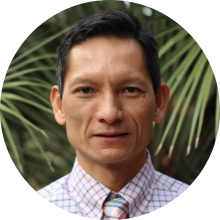
John holds a BS in Physics from Virginia Tech, where he studied semiconductor and high-temperature superconductor technologies. With 25+ years in electronics, his experience spans complex SoCs to secure and standard MCUs. He has been with ST for over 12 years, currently specializing in NFC technologies.

Kyle is a Field Application Engineer for STSAFE-A and STSAFE-TPM products. Since joining ST in 2022, he has helped customers secure their systems. Kyle is from Austin, Texas, and holds an MS in Electrical Engineering from Georgia Tech.
The STM32U3 series delivers best-in-class low-power consumption and robust security features in a cost-effective design.
Powered by an Arm® Cortex®-M33 core running at 96 MHz, it offers a wide range of package options—from 32 to 100 pins—including LQFP, UFBGA, QFN, and WLCSP. The series provides 256 KB of RAM and up to 1 MB of dual-bank flash memory for flexible operations.
All rights reserved © 2025 STMicroelectronics | Terms of use | Sales Terms & Conditions | Trademarks | Privacy Portal