
Join our hands-on workshop for an in-depth exploration of ST's latest STM32U0 microcontroller, designed for cost-sensitive applications requiring ultra-low-power consumption and robust security protection.
During this 5-hour workshop, we’ll reveal how the STM32U0’s unique architecture and peripheral block designs contribute to unparalleled power efficiency. You’ll also discover its EMBC-certified Level-3 SESIP security, ensuring robust code and data protection for critical applications.
Engage directly with this innovative technology in our hands-on sessions, where you’ll interact with the segment LCD driver and USB peripheral, witness the STM32U0’s impressive power consumption firsthand, and benefit from our comprehensive ecosystem support, including STM32CubeMX and GIT, to streamline your development projects. All attendees will receive a complimentary STM32U083C-DK Discovery kit at the beginning of the workshop, and lunch and refreshments will be provided.
STM32 specialists will be on hand during the workshop to offer technical support and address any questions you may have.
This workshop is intended for 8-bit, 16-bit and 32-bit engineers, firmware developers, and hardware design engineers of all levels looking to design with an affordable, power-efficient MCU.
Lorem ipsum dolor sit amet, consectetur adipisicing elit.
Please select your preferred session.
Date
Time
Morning session: Stepper motors with STSPIN820 / POWERSTEP01
9:00 - 10:00
Stepper motor fundaments
Theory: What makes a stepper turn?
Voltage and current mode drive
Limitations,speed/torque,ect
11:30 - 12:30
Lunch
11:30 - 12:30
Lunch
11:30 - 12:30
Lunch
11:30 - 12:30
Lunch
10:00 - 11:30
STSPIN820 or POWERSTEP01
Using the GUI to evaluate motor operation
Configuring motor control parameters with the GUI
Implementing a drive based on the firmware pack
10:00 - 11:30
STSPIN820 or POWERSTEP01
Using the GUI to evaluate motor operation
Configuring motor control parameters with the GUI
Implementing a drive based on the firmware pack
9:00 - 10:00
Stepper motor fundaments
Theory: What makes a stepper turn?
Voltage and current mode drive
Limitations,speed/torque,ect
Afternoon session: BLDC motors with STSPIN32F0
12:30 - 1:30
BLDC theory and fundamentals
# pole pairs
What makes FOC work (donkey and carrot example)
Sensoriess vs. Sensored feedback control
1:30 - 3:00
Implementing a 6-step drive
3:00 - 4:30
Implementing a FOC drive
3:00 - 4:30
Implementing a FOC drive
3:00 - 4:30
Implementing a FOC drive
3:00 - 4:30
Implementing a FOC drive
3:00 - 4:30
Implementing a FOC drive
3:00 - 4:30
Implementing a FOC drive
3:00 - 4:30
Implementing a FOC drive
3:00 - 4:30
Implementing a FOC drive
Afternoon session: BLDC motors with STSPIN32F0
12:30 - 1:30
BLDC theory and fundamentals
# pole pairs
What makes FOC work (donkey and carrot example)
Sensoriess vs. Sensored feedback control
3:00 - 4:30
Implementing a FOC drive
3:00 - 4:30
Implementing a FOC drive
3:00 - 4:30
Implementing a FOC drive
3:00 - 4:30
Implementing a FOC drive
3:00 - 4:30
Implementing a FOC drive
3:00 - 4:30
Implementing a FOC drive
3:00 - 4:30
Implementing a FOC drive
3:00 - 4:30
Implementing a FOC drive
3:00 - 4:30
Implementing a FOC drive
Afternoon session: BLDC motors with STSPIN32F0
12:30 - 1:30
BLDC theory and fundamentals
# pole pairs
What makes FOC work (donkey and carrot example)
Sensoriess vs. Sensored feedback control
3:00 - 4:30
Implementing a FOC drive
3:00 - 4:30
Implementing a FOC drive
3:00 - 4:30
Implementing a FOC drive
3:00 - 4:30
Implementing a FOC drive
3:00 - 4:30
Implementing a FOC drive
3:00 - 4:30
Implementing a FOC drive
3:00 - 4:30
Implementing a FOC drive
3:00 - 4:30
Implementing a FOC drive
3:00 - 4:30
Implementing a FOC drive
Afternoon session: BLDC motors with STSPIN32F0
12:30 - 1:30
BLDC theory and fundamentals
# pole pairs
What makes FOC work (donkey and carrot example)
Sensoriess vs. Sensored feedback control
3:00 - 4:30
Implementing a FOC drive
3:00 - 4:30
Implementing a FOC drive
3:00 - 4:30
Implementing a FOC drive
3:00 - 4:30
Implementing a FOC drive
3:00 - 4:30
Implementing a FOC drive
3:00 - 4:30
Implementing a FOC drive
3:00 - 4:30
Implementing a FOC drive
3:00 - 4:30
Implementing a FOC drive
3:00 - 4:30
Implementing a FOC drive
Afternoon session: BLDC motors with STSPIN32F0
12:30 - 1:30
BLDC theory and fundamentals
# pole pairs
What makes FOC work (donkey and carrot example)
Sensoriess vs. Sensored feedback control
3:00 - 4:30
Implementing a FOC drive
3:00 - 4:30
Implementing a FOC drive
3:00 - 4:30
Implementing a FOC drive
3:00 - 4:30
Implementing a FOC drive
3:00 - 4:30
Implementing a FOC drive
3:00 - 4:30
Implementing a FOC drive
3:00 - 4:30
Implementing a FOC drive
3:00 - 4:30
Implementing a FOC drive
3:00 - 4:30
Implementing a FOC drive
Afternoon session: BLDC motors with STSPIN32F0
12:30 - 1:30
BLDC theory and fundamentals
# pole pairs
What makes FOC work (donkey and carrot example)
Sensoriess vs. Sensored feedback control
3:00 - 4:30
Implementing a FOC drive
3:00 - 4:30
Implementing a FOC drive
3:00 - 4:30
Implementing a FOC drive
3:00 - 4:30
Implementing a FOC drive
3:00 - 4:30
Implementing a FOC drive
3:00 - 4:30
Implementing a FOC drive
3:00 - 4:30
Implementing a FOC drive
3:00 - 4:30
Implementing a FOC drive
3:00 - 4:30
Implementing a FOC drive
Afternoon session: BLDC motors with STSPIN32F0
12:30 - 1:30
BLDC theory and fundamentals
# pole pairs
What makes FOC work (donkey and carrot example)
Sensoriess vs. Sensored feedback control
3:00 - 4:30
Implementing a FOC drive
3:00 - 4:30
Implementing a FOC drive
3:00 - 4:30
Implementing a FOC drive
3:00 - 4:30
Implementing a FOC drive
3:00 - 4:30
Implementing a FOC drive
3:00 - 4:30
Implementing a FOC drive
3:00 - 4:30
Implementing a FOC drive
3:00 - 4:30
Implementing a FOC drive
3:00 - 4:30
Implementing a FOC drive
Afternoon session: BLDC motors with STSPIN32F0
12:30 - 1:30
BLDC theory and fundamentals
# pole pairs
What makes FOC work (donkey and carrot example)
Sensoriess vs. Sensored feedback control
3:00 - 4:30
Implementing a FOC drive
3:00 - 4:30
Implementing a FOC drive
3:00 - 4:30
Implementing a FOC drive
3:00 - 4:30
Implementing a FOC drive
3:00 - 4:30
Implementing a FOC drive
3:00 - 4:30
Implementing a FOC drive
3:00 - 4:30
Implementing a FOC drive
3:00 - 4:30
Implementing a FOC drive
3:00 - 4:30
Implementing a FOC drive
Afternoon session: BLDC motors with STSPIN32F0
12:30 - 1:30
BLDC theory and fundamentals
# pole pairs
What makes FOC work (donkey and carrot example)
Sensoriess vs. Sensored feedback control
3:00 - 4:30
Implementing a FOC drive
3:00 - 4:30
Implementing a FOC drive
3:00 - 4:30
Implementing a FOC drive
3:00 - 4:30
Implementing a FOC drive
3:00 - 4:30
Implementing a FOC drive
3:00 - 4:30
Implementing a FOC drive
3:00 - 4:30
Implementing a FOC drive
3:00 - 4:30
Implementing a FOC drive
3:00 - 4:30
Implementing a FOC drive
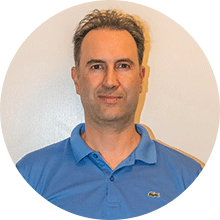
Nicolas joined STMicroelectronics in 2002 in Rousset, France, and was transferred to Silicon Valley in 2003 to support customers and develop business on the West Coast. He played a key role in the success of the STM32 family, which became the number one general-purpose microcontroller (MCU) in 2021.

Tim Nakonsut is a Staff Product Marketing Engineer supporting ST's microcontroller portfolio, a position he has held since 2014. He began his career as an Application Engineer for microcontrollers, MEMS, and touch sensors. Tim obtained his bachelor’s degree in computer engineering from San Jose State University.
The STM32U083C-DK Discovery kit is a complete demonstration and development platform for the STM32U083MCT6 microcontroller. It is used as a reference design for application development before porting to the final product.
The full range of hardware features on the board helps the user to evaluate all the peripherals (USB FS device, segment LCD, touchkey, temperature sensor, and others) and to develop applications. The ARDUINO® Uno V3, mikroBUS™, and extension connectors provide easy connection to extension shields or daughterboards for specific applications.
The STM32U083C-DK Discovery kit does not require any separate probe as it integrates the STLINK-V2EC debugger/programmer. It is operated by plugging it into a PC through a standard USB Type-A or USB Type-C® to USB Type-C® cable.
All rights reserved © 2024 STMicroelectronics | Terms of use | Sales Terms & Conditions | Trademarks | Privacy Portal
