

The growing adoption of Energy Storage System (ESS) across utilities, residential energy systems, AI data centers, and EV charging is driving strong demand for intelligent Battery Management Systems (BMS). As battery systems become larger, more energy-dense, and safety-critical, BMS plays a vital role in ensuring safe operation, accurate SoC/SoH monitoring, longer battery life, and optimized performance. A robust BMS is no longer just a battery protection system, but a strategic technology that enables reliable, efficient, and scalable energy storage deployment.
In this on-demand webinar, ST experts present ST’s industry-leading BMS technology and explain how electrochemical impedance spectroscopy (EIS) can improve battery monitoring and system performance in industrial applications. Attendees will gain a practical understanding of key battery management design challenges, including accuracy, safety, reliability, and state-of-health analysis. The on-demand webinar also shows how an EIS-based approach can help optimize battery usage, support predictive maintenance, and simplify the development of advanced battery energy storage systems.
Don't hesitate and register NOW!!
In this on-demand webinar, we will discuss:
Lorem ipsum dolor sit amet, consectetur adipisicing elit.
Time
Content
8:00 - 9:00
Registration and system check for pre-installed tools
Morning session: Stepper motors with STSPIN820 / POWERSTEP01
9:00 - 10:00
Stepper motor fundaments
Theory: What makes a stepper turn?
Voltage and current mode drive
Limitations,speed/torque,ect
9:00 - 10:00
Stepper motor fundaments
Theory: What makes a stepper turn?
Voltage and current mode drive
Limitations,speed/torque,ect
11:30 - 12:30
Lunch
11:30 - 12:30
Lunch
11:30 - 12:30
Lunch
11:30 - 12:30
Lunch
10:00 - 11:30
STSPIN820 or POWERSTEP01
Using the GUI to evaluate motor operation
Configuring motor control parameters with the GUI
Implementing a drive based on the firmware pack
10:00 - 11:30
STSPIN820 or POWERSTEP01
Using the GUI to evaluate motor operation
Configuring motor control parameters with the GUI
Implementing a drive based on the firmware pack
9:00 - 10:00
Stepper motor fundaments
Theory: What makes a stepper turn?
Voltage and current mode drive
Limitations,speed/torque,ect
11:30 - 12:30
Lunch
Afternoon session: BLDC motors with STSPIN32F0
12:30 - 1:30
BLDC theory and fundamentals
# pole pairs
What makes FOC work (donkey and carrot example)
Sensoriess vs. Sensored feedback control
1:30 - 3:00
Implementing a 6-step drive
3:00 - 4:30
Implementing a FOC drive
3:00 - 4:30
Implementing a FOC drive
3:00 - 4:30
Implementing a FOC drive
3:00 - 4:30
Implementing a FOC drive
3:00 - 4:30
Implementing a FOC drive
3:00 - 4:30
Implementing a FOC drive
3:00 - 4:30
Implementing a FOC drive
3:00 - 4:30
Implementing a FOC drive
Afternoon session: BLDC motors with STSPIN32F0
12:30 - 1:30
BLDC theory and fundamentals
# pole pairs
What makes FOC work (donkey and carrot example)
Sensoriess vs. Sensored feedback control
3:00 - 4:30
Implementing a FOC drive
3:00 - 4:30
Implementing a FOC drive
3:00 - 4:30
Implementing a FOC drive
3:00 - 4:30
Implementing a FOC drive
3:00 - 4:30
Implementing a FOC drive
3:00 - 4:30
Implementing a FOC drive
3:00 - 4:30
Implementing a FOC drive
3:00 - 4:30
Implementing a FOC drive
3:00 - 4:30
Implementing a FOC drive
Afternoon session: BLDC motors with STSPIN32F0
12:30 - 1:30
BLDC theory and fundamentals
# pole pairs
What makes FOC work (donkey and carrot example)
Sensoriess vs. Sensored feedback control
3:00 - 4:30
Implementing a FOC drive
3:00 - 4:30
Implementing a FOC drive
3:00 - 4:30
Implementing a FOC drive
3:00 - 4:30
Implementing a FOC drive
3:00 - 4:30
Implementing a FOC drive
3:00 - 4:30
Implementing a FOC drive
3:00 - 4:30
Implementing a FOC drive
3:00 - 4:30
Implementing a FOC drive
3:00 - 4:30
Implementing a FOC drive
Afternoon session: BLDC motors with STSPIN32F0
12:30 - 1:30
BLDC theory and fundamentals
# pole pairs
What makes FOC work (donkey and carrot example)
Sensoriess vs. Sensored feedback control
3:00 - 4:30
Implementing a FOC drive
3:00 - 4:30
Implementing a FOC drive
3:00 - 4:30
Implementing a FOC drive
3:00 - 4:30
Implementing a FOC drive
3:00 - 4:30
Implementing a FOC drive
3:00 - 4:30
Implementing a FOC drive
3:00 - 4:30
Implementing a FOC drive
3:00 - 4:30
Implementing a FOC drive
3:00 - 4:30
Implementing a FOC drive
Afternoon session: BLDC motors with STSPIN32F0
12:30 - 1:30
BLDC theory and fundamentals
# pole pairs
What makes FOC work (donkey and carrot example)
Sensoriess vs. Sensored feedback control
3:00 - 4:30
Implementing a FOC drive
3:00 - 4:30
Implementing a FOC drive
3:00 - 4:30
Implementing a FOC drive
3:00 - 4:30
Implementing a FOC drive
3:00 - 4:30
Implementing a FOC drive
3:00 - 4:30
Implementing a FOC drive
3:00 - 4:30
Implementing a FOC drive
3:00 - 4:30
Implementing a FOC drive
3:00 - 4:30
Implementing a FOC drive
Afternoon session: BLDC motors with STSPIN32F0
12:30 - 1:30
BLDC theory and fundamentals
# pole pairs
What makes FOC work (donkey and carrot example)
Sensoriess vs. Sensored feedback control
3:00 - 4:30
Implementing a FOC drive
3:00 - 4:30
Implementing a FOC drive
3:00 - 4:30
Implementing a FOC drive
3:00 - 4:30
Implementing a FOC drive
3:00 - 4:30
Implementing a FOC drive
3:00 - 4:30
Implementing a FOC drive
3:00 - 4:30
Implementing a FOC drive
3:00 - 4:30
Implementing a FOC drive
3:00 - 4:30
Implementing a FOC drive
Afternoon session: BLDC motors with STSPIN32F0
12:30 - 1:30
BLDC theory and fundamentals
# pole pairs
What makes FOC work (donkey and carrot example)
Sensoriess vs. Sensored feedback control
3:00 - 4:30
Implementing a FOC drive
3:00 - 4:30
Implementing a FOC drive
3:00 - 4:30
Implementing a FOC drive
3:00 - 4:30
Implementing a FOC drive
3:00 - 4:30
Implementing a FOC drive
3:00 - 4:30
Implementing a FOC drive
3:00 - 4:30
Implementing a FOC drive
3:00 - 4:30
Implementing a FOC drive
3:00 - 4:30
Implementing a FOC drive
Afternoon session: BLDC motors with STSPIN32F0
12:30 - 1:30
BLDC theory and fundamentals
# pole pairs
What makes FOC work (donkey and carrot example)
Sensoriess vs. Sensored feedback control
3:00 - 4:30
Implementing a FOC drive
3:00 - 4:30
Implementing a FOC drive
3:00 - 4:30
Implementing a FOC drive
3:00 - 4:30
Implementing a FOC drive
3:00 - 4:30
Implementing a FOC drive
3:00 - 4:30
Implementing a FOC drive
3:00 - 4:30
Implementing a FOC drive
3:00 - 4:30
Implementing a FOC drive
3:00 - 4:30
Implementing a FOC drive
Afternoon session: BLDC motors with STSPIN32F0
12:30 - 1:30
BLDC theory and fundamentals
# pole pairs
What makes FOC work (donkey and carrot example)
Sensoriess vs. Sensored feedback control
3:00 - 4:30
Implementing a FOC drive
3:00 - 4:30
Implementing a FOC drive
3:00 - 4:30
Implementing a FOC drive
3:00 - 4:30
Implementing a FOC drive
3:00 - 4:30
Implementing a FOC drive
3:00 - 4:30
Implementing a FOC drive
3:00 - 4:30
Implementing a FOC drive
3:00 - 4:30
Implementing a FOC drive
3:00 - 4:30
Implementing a FOC drive

Kerwin is currently an application engineer at the STMicroelectronics Power and Energy Competence Center. He is based in Shanghai. Kerwin mainly handles the hardware design, promotion, and support of application solutions such as BMS, EIS, metering, power line communication, and AFCI.
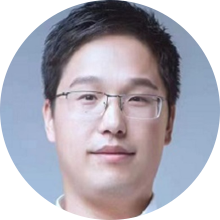
Ryan is currently an application engineer and embedded software engineer at the Power & Energy Competence Center of STMicroelectronics. His research interests include wireless power transfer systems, photovoltaic arc fault detection, and electrochemical impedance spectroscopy (EIS) identification for battery management systems. His work focuses on embedded algorithm development, power electronics control implementation, and system validation for new energy and power conversion applications.
All rights reserved © 2026 STMicroelectronics | Terms of use | Sales Terms & Conditions | Trademarks | Privacy Portal